
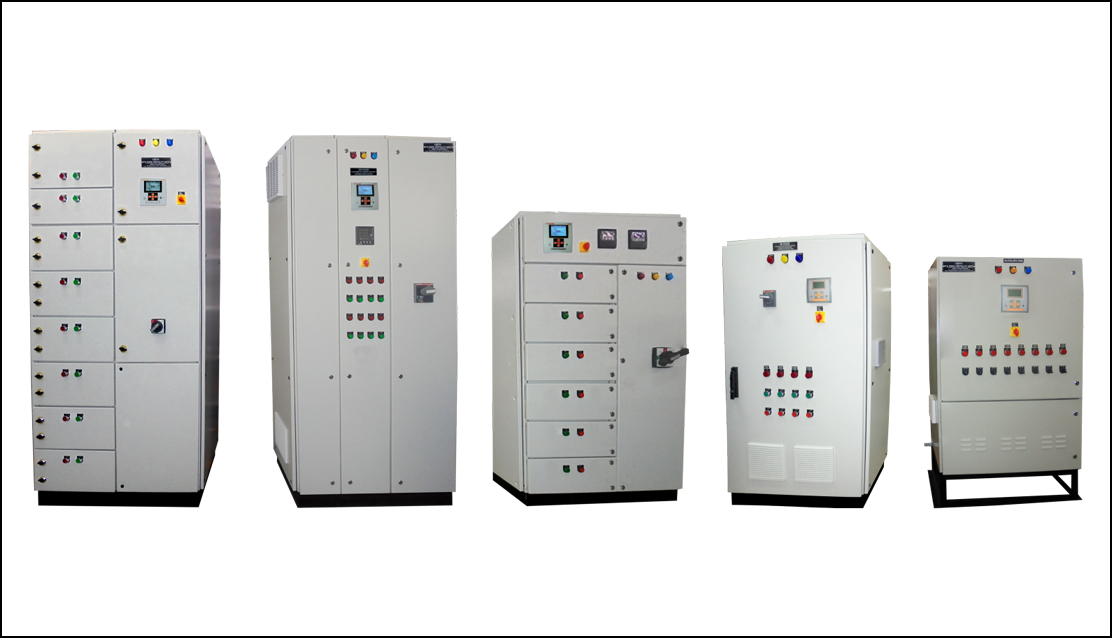
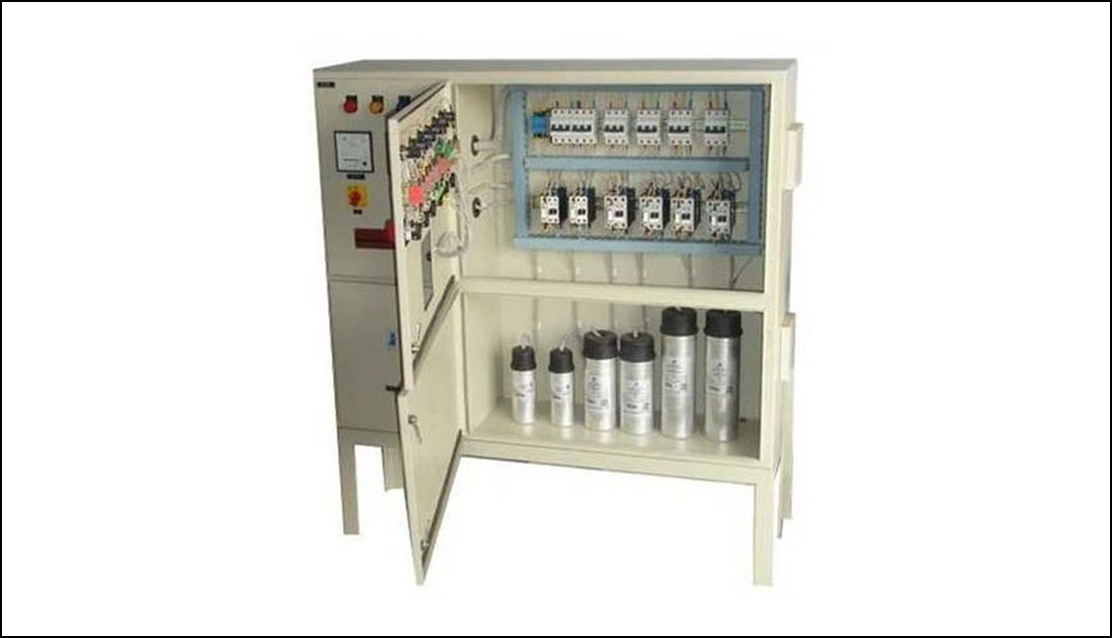
APFC Panels
POLARIS Automatic Power Factor Correction (APFC) Panels are engineered to maintain optimal power factor in industrial and commercial electrical systems by automatically switching capacitor banks in or out based on the reactive power demand of the facility. Poor power factor increases the reactive current drawn from the grid, resulting in higher electricity bills, PF penalty charges from utilities, increased transformer and cable loading, and poor voltage regulation. POLARIS APFC Panels use intelligent microprocessor-based controllers that continuously monitor the power factor and switch capacitor stages on or off to maintain the target PF — typically 0.95 or above. Each panel is designed with properly rated capacitors, detuned reactors to prevent harmonic resonance, thyristor or contactor switching, and protection devices for capacitor bank safety.
Key Features
- Automatic capacitor bank switching to maintain power factor at or above 0.95 continuously.
- Microprocessor-based power factor controller with 6 to 16 capacitor stages.
- Detuned reactors (p=5.67% or 7%) to prevent harmonic resonance with capacitors.
- Thyristor-based or contactor-based switching for fast or standard capacitor switching.
- Capacitors with built-in overvoltage protection and discharge resistors for safety.
- Over-voltage, under-voltage, and over-temperature protection for panel and capacitors.
- Energy meters and power analysers for monitoring reactive power and PF improvement.
- Alarm outputs and fault indication for capacitor failure, fuse blown, and controller faults.
- Sheet steel enclosure with proper ventilation for capacitor and reactor thermal management.
- Designed per IS 13340, IEC 60831 standards for power factor correction equipment.
Frequently Asked Questions
Why is power factor correction important for industrial facilities?
Low power factor means higher reactive current is drawn from the grid, leading to increased electricity bills, power factor penalty charges from the utility, higher losses in transformers and cables, and poor voltage regulation. Correcting power factor with an APFC Panel reduces these losses, eliminates penalties, and improves the overall efficiency of the electrical system.
How does an APFC Panel maintain power factor automatically?
An APFC Panel uses a microprocessor-based controller that continuously measures the power factor at the incoming supply. When the power factor drops below the target (typically 0.95), the controller switches in a capacitor stage to supply reactive power locally. When reactive demand reduces, capacitor stages are switched out — maintaining the target PF automatically throughout the operating cycle.
What are detuned reactors and why are they used in APFC Panels?
Detuned reactors are series inductors connected with each capacitor bank to shift the resonant frequency away from dominant harmonic frequencies (5th, 7th) in the network. This prevents harmonic amplification and capacitor overloading in systems with non-linear loads like VFDs, UPS systems, and rectifiers.
What is the difference between contactor-switched and thyristor-switched APFC Panels?
Contactor-switched APFC Panels use electromechanical contactors to switch capacitor banks — economical and suitable for loads with moderate variation. Thyristor-switched panels use semiconductor switches for nearly instantaneous switching (within milliseconds) and are ideal for rapidly fluctuating loads like welding machines, rolling mills, or arc furnaces.
How do I determine the KVAR rating required for my facility's APFC Panel?
The required KVAR rating is calculated based on your facility's maximum KVA demand, existing power factor, and target power factor. POLARIS's engineering team performs a load analysis using your electricity bill data and load profile to design an APFC Panel with the correct capacitor bank size and staging.